Einbeck beer barrel path - Barrel 7: Of historic waters and domestic barley

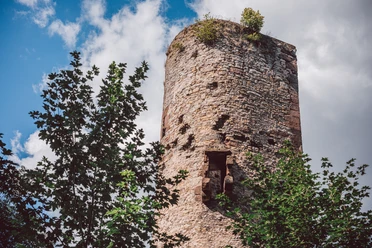
Tip: Click through the media gallery and listen to the audio file to hear a fascinating story about Einbeck’s Diekturm and Heinrich Diek, who was accused of arson at the time.
Welcome to the Einbeck Beer Trail. We’re glad you’re setting out to discover the story behind our delicious beer! Follow the “Fass-Spur” through Einbeck!
Information about Keg 7:
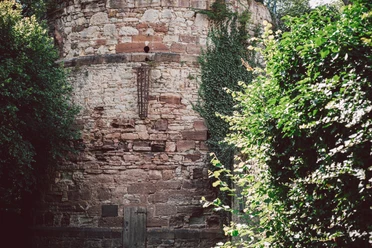
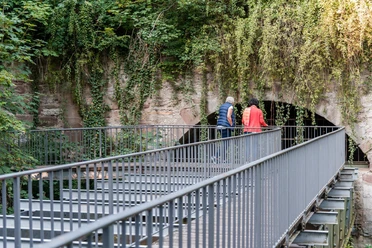
You’re now standing in front of a “bridge.” But it’s not really a bridge at all! You’re at the spot “where one body of water flows over another”—at our historic water tower, a landmark of our city. The mill canal is routed here over the Krume Wasser. Both bodies of water were put to use: one to power the town’s mills, and the other for drinking and brewing beer. However, since the water from wells and streams in the Middle Ages was usually contaminated with feces and caused diseases, people preferred to drink beer instead. This is because the brewing process kills bacteria. That’s also why beer soup was very popular, by the way.
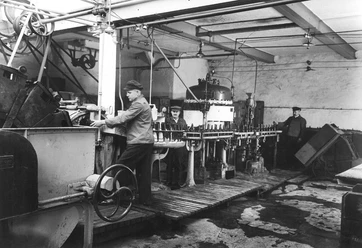
The German BeerPurity Law stipulates that beer may be produced exclusively from the ingredients barley malt (wheat malt), water, hops, and yeast. Hops give beer its bitter taste and improve its shelf life. They were once grown on plots of land (called hop gardens or hop hills) in the immediate vicinity of Einbeck. Since that wasn’t enough, hops were imported from the Hallertau region in Bavaria as early as the Middle Ages. Even today, the Einbeck Brewery sources the “Herkules” and “Hallertauer Tradition” varieties from there. The brewing barley, on the other hand, has been sourced directly from the region since 2021. Approximately 35,000 hectoliters of beer are brewed from it.
To reach the next keg, No. 8, head over the Wasserkasten, then straight ahead, turn left over the bridge, and turn left again past the Diekturm toward downtown. Please note that parts of this path are unpaved!
Welcome to the Einbeck Beer Trail. We’re glad you’re setting out to discover the story behind our delicious beer! Follow the “Fass-Spur” through Einbeck!
Information about Keg 7:
You’re now standing in front of a “bridge.” But it’s not really a bridge at all! You’re at the spot “where one body of water flows over another”—at our historic water tower, a landmark of our city. The mill canal is routed here over the Krume Wasser. Both bodies of water were put to use: one to power the town’s mills, and the other for drinking and brewing beer. However, since the water from wells and streams in the Middle Ages was usually contaminated with feces and caused diseases, people preferred to drink beer instead. This is because the brewing process kills bacteria. That’s also why beer soup was very popular, by the way.
The German BeerPurity Law stipulates that beer may be produced exclusively from the ingredients barley malt (wheat malt), water, hops, and yeast. Hops give beer its bitter taste and improve its shelf life. They were once grown on plots of land (called hop gardens or hop hills) in the immediate vicinity of Einbeck. Since that wasn’t enough, hops were imported from the Hallertau region in Bavaria as early as the Middle Ages. Even today, the Einbeck Brewery sources the “Herkules” and “Hallertauer Tradition” varieties from there. The brewing barley, on the other hand, has been sourced directly from the region since 2021. Approximately 35,000 hectoliters of beer are brewed from it.
To reach the next keg, No. 8, head over the Wasserkasten, then straight ahead, turn left over the bridge, and turn left again past the Diekturm toward downtown. Please note that parts of this path are unpaved!


Good to know
Openings
- Can be visited at any time.
Eligibility
for Groups
for Class
for familys
for individual guests
Pet allowed
Suitable for the Elderly
Suitable for Pushchair
for Children of the age of 3-6
for Children of the age of 6-10
for Children of the age of 10 upwards
Linguistic proficiency
- German, English
Other Furnishing/Equipment
Barrier-free access
Payment methods
- free of charge
Directions & Parking facilities
- The historic water conduit is located in the Officers’ Garden close to the tower Diekturm, directly behind the guesthouse at the part of the rampart called Mühlenwall (mill rampart).
From Einbeck Market Square it takes 10 minutes (800 metres) to walk to the historic water conduit.
By public transport you will arrive at Einbeck central train station that is close to the city centre. From there, you may walk to the historic water conduit. License (master data)
Einbeck Tourismus