Ramparts

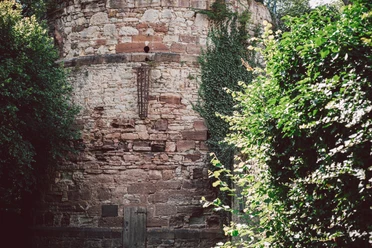
The ramparts are a popular, approx. 2 kilometres long circular route around the historic old town of Einbeck. The route consists of the rampart sections Bäckerwall (bakers’ rampart), Krähengraben (crows’ trench), Mühlenwall (mill rampart), Bürgermeisterwall (mayor's rampart) und Langer Wall (long rampart). Part of the kilometres-long town wall that once counted two dozens of towers and five town gates is still in place along the ramparts. The towers were built in regular distances of 60 to 70 metres at bends in the town wall.
The town wall with ramparts was built as fortification system and was first mentioned in a document in 1624. The wall was built out of mortar and quarry stones and was leaned against a previously built earth wall. The town wall was heavily damaged as a consequence from different historic events e.g. the Thirty Years' War and occupation by the French troops in the Seven Years' War.
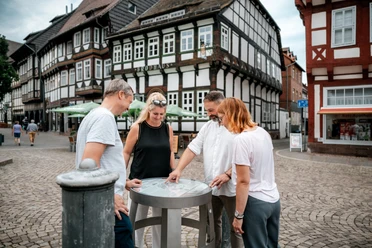
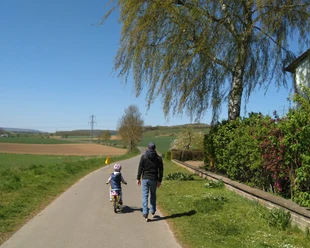
The ramparts along the town wall are a beautiful destination for tourists and visitors as well as residents of Einbeck and offer various resting opportunities with numerous seating facilities. Especially for those who would like to have a nice walk and enjoy some nature, far away from the timber-framed houses on Einbeck's Market Square, the ramparts are perfectly suitable.
Even today the town wall with trenches and ramparts is completely preserved between the former gates Tiedexer Tor and Hullerser Tor. The part between Tiedexer Tor and Hullerser Tor is called Bäckerwall (bakers’ rampart) where you may find a mini-golf course for families and a playground for younger ones.
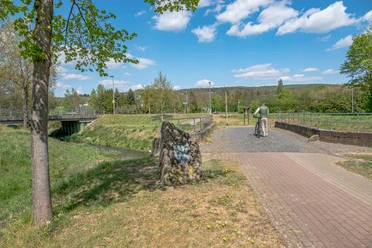
After crossing the zebra crossing at the end of Bäckerwall you arrive at the section Krähengraben (crows' trench). Along Krähengraben you will find the Storchenturm (half-round tower in the town wall) and the bastion at the rampart (mighty strongholds) on the left-hand side. At the end of Krähengraben, on the right-hand side, you will see a medieval water conduit. This is the place where the Mühlenkanal (mill channel) is channelled across the river Krumme Wasser next to the tower Diekturm.
The tower Diekturm was a mighty bastion safeguarding the water supply in medieval times.
After passing the street Benser Straße you get from Krähengraben to Mühlenwall (mill rampart). After a few metres you will find the memorial for Jewish fellow citizens on the right-hand side. At this place stood the New Synagogue that was burned down in pogrom night.
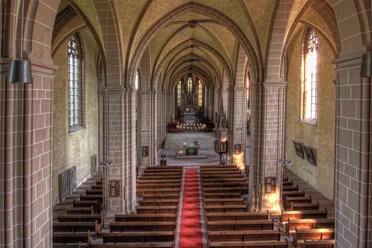
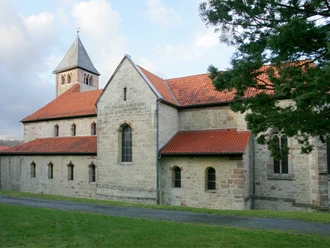
If you turn left into the street Sonnenhaken, after a couple of metres you will see the right side of the tower Pulverturm (powder tower). The Pulverturm was part of the town fortifications. Straight-ahead at the end of the street the Bürgermeisterwall (mayor's rampart) is located. At the end of Bürgermeisterwall follows the Lange Wall (long rampart). On the left side of Lange Wall, hidden behind the rail tracks and the former mansion of August Stukenbrok as well as the St. Joseph’s Catholic Church, you will find the access to the Stiftsgarten (Collegiate's gardens). If you cross the Stiftsgarten you reach the St. Alexandri Minster (St. Alexandri's Collegiate Church). In the north of St. Alexandri the Knochenturm (bones' tower; former powder tower that was later on used as an ossuary) is located - nowadays only a couple of metres tall ruin is left to see - as well as the Totenturm (tower of the dead). The name of the Totenturm originates in its location close to the former cemetery.
The town wall with ramparts was built as fortification system and was first mentioned in a document in 1624. The wall was built out of mortar and quarry stones and was leaned against a previously built earth wall. The town wall was heavily damaged as a consequence from different historic events e.g. the Thirty Years' War and occupation by the French troops in the Seven Years' War.
The ramparts along the town wall are a beautiful destination for tourists and visitors as well as residents of Einbeck and offer various resting opportunities with numerous seating facilities. Especially for those who would like to have a nice walk and enjoy some nature, far away from the timber-framed houses on Einbeck's Market Square, the ramparts are perfectly suitable.
Even today the town wall with trenches and ramparts is completely preserved between the former gates Tiedexer Tor and Hullerser Tor. The part between Tiedexer Tor and Hullerser Tor is called Bäckerwall (bakers’ rampart) where you may find a mini-golf course for families and a playground for younger ones.
After crossing the zebra crossing at the end of Bäckerwall you arrive at the section Krähengraben (crows' trench). Along Krähengraben you will find the Storchenturm (half-round tower in the town wall) and the bastion at the rampart (mighty strongholds) on the left-hand side. At the end of Krähengraben, on the right-hand side, you will see a medieval water conduit. This is the place where the Mühlenkanal (mill channel) is channelled across the river Krumme Wasser next to the tower Diekturm.
The tower Diekturm was a mighty bastion safeguarding the water supply in medieval times.
After passing the street Benser Straße you get from Krähengraben to Mühlenwall (mill rampart). After a few metres you will find the memorial for Jewish fellow citizens on the right-hand side. At this place stood the New Synagogue that was burned down in pogrom night.
If you turn left into the street Sonnenhaken, after a couple of metres you will see the right side of the tower Pulverturm (powder tower). The Pulverturm was part of the town fortifications. Straight-ahead at the end of the street the Bürgermeisterwall (mayor's rampart) is located. At the end of Bürgermeisterwall follows the Lange Wall (long rampart). On the left side of Lange Wall, hidden behind the rail tracks and the former mansion of August Stukenbrok as well as the St. Joseph’s Catholic Church, you will find the access to the Stiftsgarten (Collegiate's gardens). If you cross the Stiftsgarten you reach the St. Alexandri Minster (St. Alexandri's Collegiate Church). In the north of St. Alexandri the Knochenturm (bones' tower; former powder tower that was later on used as an ossuary) is located - nowadays only a couple of metres tall ruin is left to see - as well as the Totenturm (tower of the dead). The name of the Totenturm originates in its location close to the former cemetery.


Good to know
Openings
- Accessible at any time.
Price info
- Einbeck's ramparts are open to the public completely free of charge. Viewing the towers from the respective ramparts is also free of charge.
Eligibility
Suitable for any weather
for Groups
for Class
for familys
for individual guests
Suitable for the Elderly
for Children of all Ages
Suitable for Pushchair
Linguistic proficiency
- German
Other Furnishing/Equipment
Children's Playground (outdoors)
Barrier-free access
Payment methods
- free of charge
Accessibility
- General Information on AccessibilityRollstuhlfahrer und Familien mit Kinderwagen können die Wallanlagen befahren.
Folgendes gilt jedoch zu beachten: Gegebenenfalls und je nach Wetterlage gibt es durch Matsch oder Schotterabschnitte, wie z.B. an den Teichen am Bäckerwall, in der Barrierefreiheit Einschränkungen, sodass das Befahren mit dem Rollstuhl nicht ohne Hilfe durch eine andere Person möglich ist. Ebenso verfügen manche Wallabschnitte über eine leichte Steigung. Directions & Parking facilities
- The ramparts surround the complete old town of Einbeck.
Visitors of Einbeck may arrive by car via A7 (exit Northeim), B64 and B3. When arriving from the B3 you will get to various suitable parking lots in the inner city (e.g. a very convenient location: the parking lot at Bäckerwall – bakers’ rampart) from that you may walk directly onto the ramparts.
If you are arriving by train, you will get to Einbeck central train station from direction Göttingen or Hannover via Einbeck-Salzderhelden train station. From Einbeck central train station you may start your tour on Bürgermeisterwall (mayor's rampart) in direction to Mühlenwall (mill rampart). License (master data)
Tourist-Information Einbeck