Einbeck beer barrel path - Barrel 1: Of strict brewing rules and Bavarian knowledge acquisition

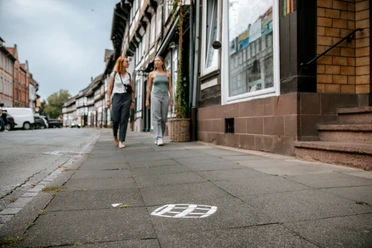
Welcome to the Einbeck Beer Trail. We’re glad you’re setting out to discover our delicious beer! Follow the “Fass-Spur” through Einbeck!
Information from Keg No. 1:
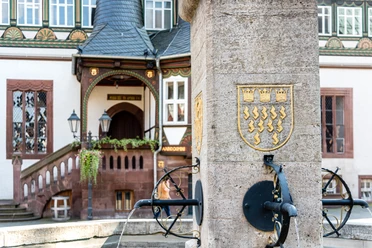
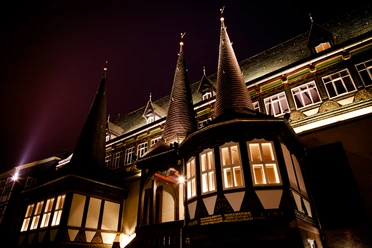
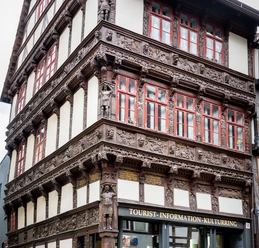
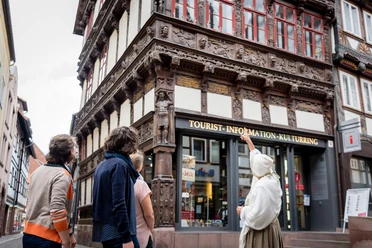
You’re standing in front of the historic Old Town Hall on Marktplatz in Einbeck. The city council has been meeting there since the Middle Ages. But what does that have to do with our beer?
It’s simple: Starting in the 14th century, the city council permitted commercial beer brewing only to Einbeck’s “full citizens,” whose homes held brewing rights. The council also set the number of homes allowed to brew. The goal was to ensure consistent beer quality. “Ainpöckische Bier” was already so popular at that time that it was traded beyond the region. It was exported to over a hundred places, from Scandinavia to the Alpine foothills!
In May, lots were drawn in the market square to determine the order in which brewing would be permitted the following winter. The owner of a house with brewing rights had to procure the brewing ingredients and provide assistant staff. The city council provided the copper brewing kettle. A set of brewing regulations governed the brewing process, the proportions of the ingredients, and quality assurance, which was overseen by ten contractually bound master brewers.
And, you won’t believe it: the well-known bock beer (a strong beer with a high alcohol content) originated in Einbeck. So the legend goes. In 1612, a master brewer from Einbeck is said to have been recruited to Munich to brew the “Ainpöckische” there. Due to the Bavarian dialect, “Ainpöckisch Bier” became “Oanpock Bier” and soon evolved into the famous “Bockbier.”
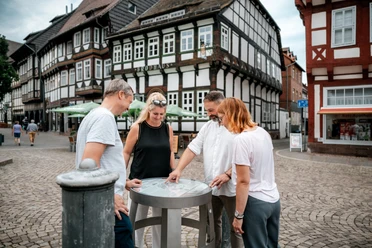
Just a few steps from here, the next keg, No. 2, is right on the market square.
Want to learn more about Einbeck as a beer town?
Check out the beautiful historic town hall cellar on a 360° tour. Still want more? Learn more about Einbeck beer here: Beer City
Tip: Get more insights into the Einbeck brewery here!
Information from Keg No. 1:
You’re standing in front of the historic Old Town Hall on Marktplatz in Einbeck. The city council has been meeting there since the Middle Ages. But what does that have to do with our beer?
It’s simple: Starting in the 14th century, the city council permitted commercial beer brewing only to Einbeck’s “full citizens,” whose homes held brewing rights. The council also set the number of homes allowed to brew. The goal was to ensure consistent beer quality. “Ainpöckische Bier” was already so popular at that time that it was traded beyond the region. It was exported to over a hundred places, from Scandinavia to the Alpine foothills!
In May, lots were drawn in the market square to determine the order in which brewing would be permitted the following winter. The owner of a house with brewing rights had to procure the brewing ingredients and provide assistant staff. The city council provided the copper brewing kettle. A set of brewing regulations governed the brewing process, the proportions of the ingredients, and quality assurance, which was overseen by ten contractually bound master brewers.
And, you won’t believe it: the well-known bock beer (a strong beer with a high alcohol content) originated in Einbeck. So the legend goes. In 1612, a master brewer from Einbeck is said to have been recruited to Munich to brew the “Ainpöckische” there. Due to the Bavarian dialect, “Ainpöckisch Bier” became “Oanpock Bier” and soon evolved into the famous “Bockbier.”
Just a few steps from here, the next keg, No. 2, is right on the market square.
Want to learn more about Einbeck as a beer town?
Check out the beautiful historic town hall cellar on a 360° tour. Still want more? Learn more about Einbeck beer here: Beer City
Tip: Get more insights into the Einbeck brewery here!


Good to know
Openings
- To be viewed at any time.
Eligibility
for Groups
for Class
for familys
for individual guests
Pet allowed
Suitable for the Elderly
Suitable for Pushchair
for Children of the age of 3-6
for Children of the age of 6-10
for Children of the age of 10 upwards
Linguistic proficiency
- German, English
Other Furnishing/Equipment
Barrier-free access
Payment methods
- free of charge
Directions & Parking facilities
- By public transport:
You can walk to the historic Market Square from Einbeck central train station in approximately 8 minutes (800 metres on foot). Cross at the traffic lights in direction to ZOB (Einbeck central bus station) and take the street Dr.-Friedrich-Uhde-Straße, cross the square Möncheplatz and continue on the street Lange Brücke directly into the pedestrian precinct and to Market Square.
If you are travelling by car, you may park your vehicle in one of the parking lots in proximity to the city centre and walk to Market Square in about 3 – 6 minutes. License (master data)
Einbeck Tourismus