Naturpark Lüneburger Heide

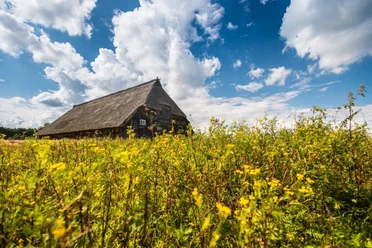
The Lüneburg Heath Nature Park is the first nature park in Germany and, with an area of 110,000 hectares, is one of the largest nature parks of its kind. At its heart is the 26,440-hectare Lüneburg Heath nature reserve, which is car-free apart from a few access roads and contains the largest contiguous areas of heathland in Central Europe. But it is not only the heathland that gives the Lüneburg Heath Nature Park its special charm. Mystical moors, freshly scented deciduous forests, crystal-clear heath streams, gently flowing heath rivers and the lively heath villages with their old thatched houses and farmsteads worthy of protection make the Lüneburg Heath Nature Park a multifaceted region.
Formed by the Ice Age and shaped by man
The cultural landscape of the Lüneburg Heath Nature Park has been formed over centuries by the influence of man and today provides a habitat for many rare plant and animal species.
Today's heathland of the Lüneburg Heath, which is one of the most popular excursion destinations in the nature park, has also undergone a long process of development. Numerous natural and human influences have played a role here. For example, today's surface structure was shaped by the ice ages. When humans settled down from the Neolithic period and began to farm, they ensured that the previously widespread forest was pushed back and the heathland was able to develop. But it was only through early protection at the beginning of the 20th century that this could be preserved in the Lüneburg Heath Nature Park.
Late summer - time of the heather blossom
During the heather blossom in August and September, you can admire a purple carpet of flowers in many places in the nature park, only briefly interrupted by the lush green junipers or silver birches. The heather bees buzz in the warm summer wind and an incomparable magic lies over the whole region. The largest contiguous areas of heathland are located in the car-free Lüneburg Heath nature reserve around the Wilseder Berg, which at 169 meters is the highest elevation in the northwest German lowlands.
The heathlands around Amelinghausen, Handeloh and Schneverdingen are also worth a visit.
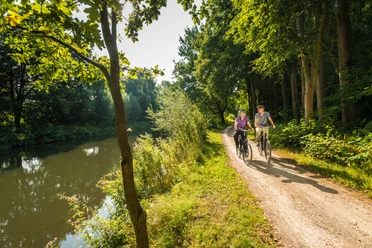
The Lüneburg Heath Nature Park has a large network of hiking trails, many designated bridle paths, the largest contiguous Nordic walking network in northern Germany and a dense network of cycle paths.
Heidschnucken - our animal landscape caretakers
The well-known Heidschnucken sheep are used to care for the heathland. Grazing heathland with Heidschnucken is probably the best-known method of heathland management. The Heidschnucken bite young trees and thus prevent birch and pine trees from expanding on the heathland. A total of ten herds are on the move 365 days a year in the Lüneburg Heath Nature Park. In addition, the heathland must also be maintained mechanically or by controlled burning. This all serves to preserve this unique landscape and always takes place in winter. Heidschnucken meat is a regional delicacy and can be sampled in almost all restaurants on the Lüneburg Heath.
Rare animals and plants
On your hike or bike tour through the Lüneburg Heath Nature Park, with a bit of luck you can observe many rare animals and plants. Rare bird species such as the woodlark, whinchat and stonechat, red-backed shrike, great grey shrike, nightjar and black grouse can be seen and heard from the paths. Small sand beetles scurry along the paths and sand lizards bask in the sun. The diversity of the landscape also accounts for the presence of a large number of rare plant species, such as the bog lily, lung gentian, heath carnation and bell heather.
The nature park is part of the National Natural Landscapes (NNL). In this alliance, the German national parks, nature parks, biosphere reserves and wilderness areas work together with people to preserve fascinating nature on around a third of Germany's surface area, convey the joy of experiencing nature and shape the future sustainably with confidence. It stands for diversity, tolerance and democracy.
Formed by the Ice Age and shaped by man
The cultural landscape of the Lüneburg Heath Nature Park has been formed over centuries by the influence of man and today provides a habitat for many rare plant and animal species.
Today's heathland of the Lüneburg Heath, which is one of the most popular excursion destinations in the nature park, has also undergone a long process of development. Numerous natural and human influences have played a role here. For example, today's surface structure was shaped by the ice ages. When humans settled down from the Neolithic period and began to farm, they ensured that the previously widespread forest was pushed back and the heathland was able to develop. But it was only through early protection at the beginning of the 20th century that this could be preserved in the Lüneburg Heath Nature Park.
Late summer - time of the heather blossom
During the heather blossom in August and September, you can admire a purple carpet of flowers in many places in the nature park, only briefly interrupted by the lush green junipers or silver birches. The heather bees buzz in the warm summer wind and an incomparable magic lies over the whole region. The largest contiguous areas of heathland are located in the car-free Lüneburg Heath nature reserve around the Wilseder Berg, which at 169 meters is the highest elevation in the northwest German lowlands.
The heathlands around Amelinghausen, Handeloh and Schneverdingen are also worth a visit.
The Lüneburg Heath Nature Park has a large network of hiking trails, many designated bridle paths, the largest contiguous Nordic walking network in northern Germany and a dense network of cycle paths.
Heidschnucken - our animal landscape caretakers
The well-known Heidschnucken sheep are used to care for the heathland. Grazing heathland with Heidschnucken is probably the best-known method of heathland management. The Heidschnucken bite young trees and thus prevent birch and pine trees from expanding on the heathland. A total of ten herds are on the move 365 days a year in the Lüneburg Heath Nature Park. In addition, the heathland must also be maintained mechanically or by controlled burning. This all serves to preserve this unique landscape and always takes place in winter. Heidschnucken meat is a regional delicacy and can be sampled in almost all restaurants on the Lüneburg Heath.
Rare animals and plants
On your hike or bike tour through the Lüneburg Heath Nature Park, with a bit of luck you can observe many rare animals and plants. Rare bird species such as the woodlark, whinchat and stonechat, red-backed shrike, great grey shrike, nightjar and black grouse can be seen and heard from the paths. Small sand beetles scurry along the paths and sand lizards bask in the sun. The diversity of the landscape also accounts for the presence of a large number of rare plant species, such as the bog lily, lung gentian, heath carnation and bell heather.
The nature park is part of the National Natural Landscapes (NNL). In this alliance, the German national parks, nature parks, biosphere reserves and wilderness areas work together with people to preserve fascinating nature on around a third of Germany's surface area, convey the joy of experiencing nature and shape the future sustainably with confidence. It stands for diversity, tolerance and democracy.

Naturpark Lüneburger Heide